Mind
WHY
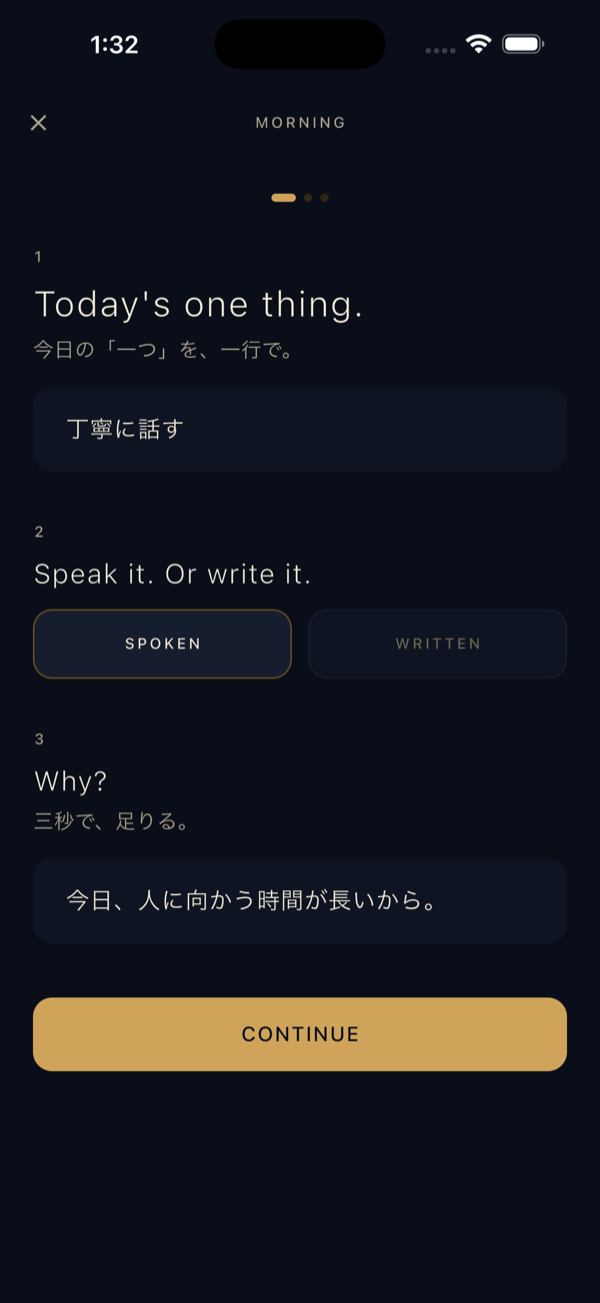
Pick one thing to care about today. The reason can be short.
A quieter game than counting checks. When Mind, Word, and Body line up — once, today — that is what Align calls a day.

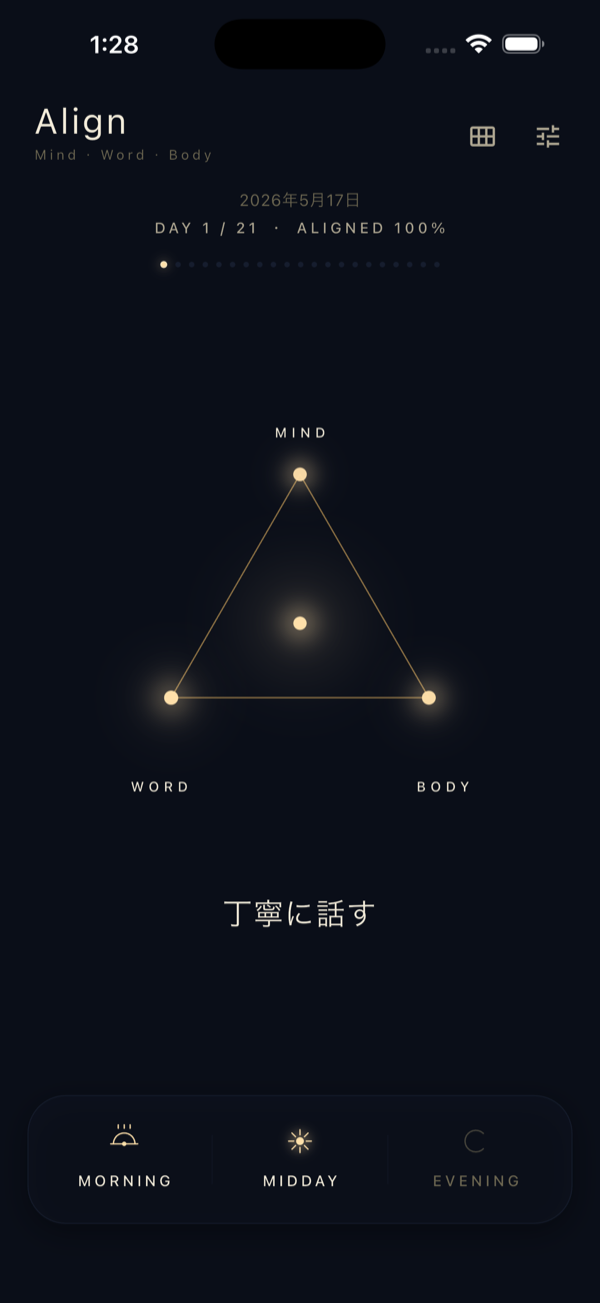

The unit of a day is not how many things you did, but whether three things lined up.
Pick one thing to care about today. The reason can be short.
Say it out loud or write it down. Sharpen the outline.
A small enactment, once. Not perfection — alignment.
Decide in the morning, place it at midday, reflect gently at night. You can align without writing much.
Write or speak the one thing you care about today.
A small action that points back to your one thing. One tap.
No judging. Put it in words. One small adjustment for tomorrow.
Records live on your phone, not on a server. Nothing is logged or analyzed.
The reasons behind the design, the details of the mechanics, the texture of daily use — left here in text.
Open the reading →